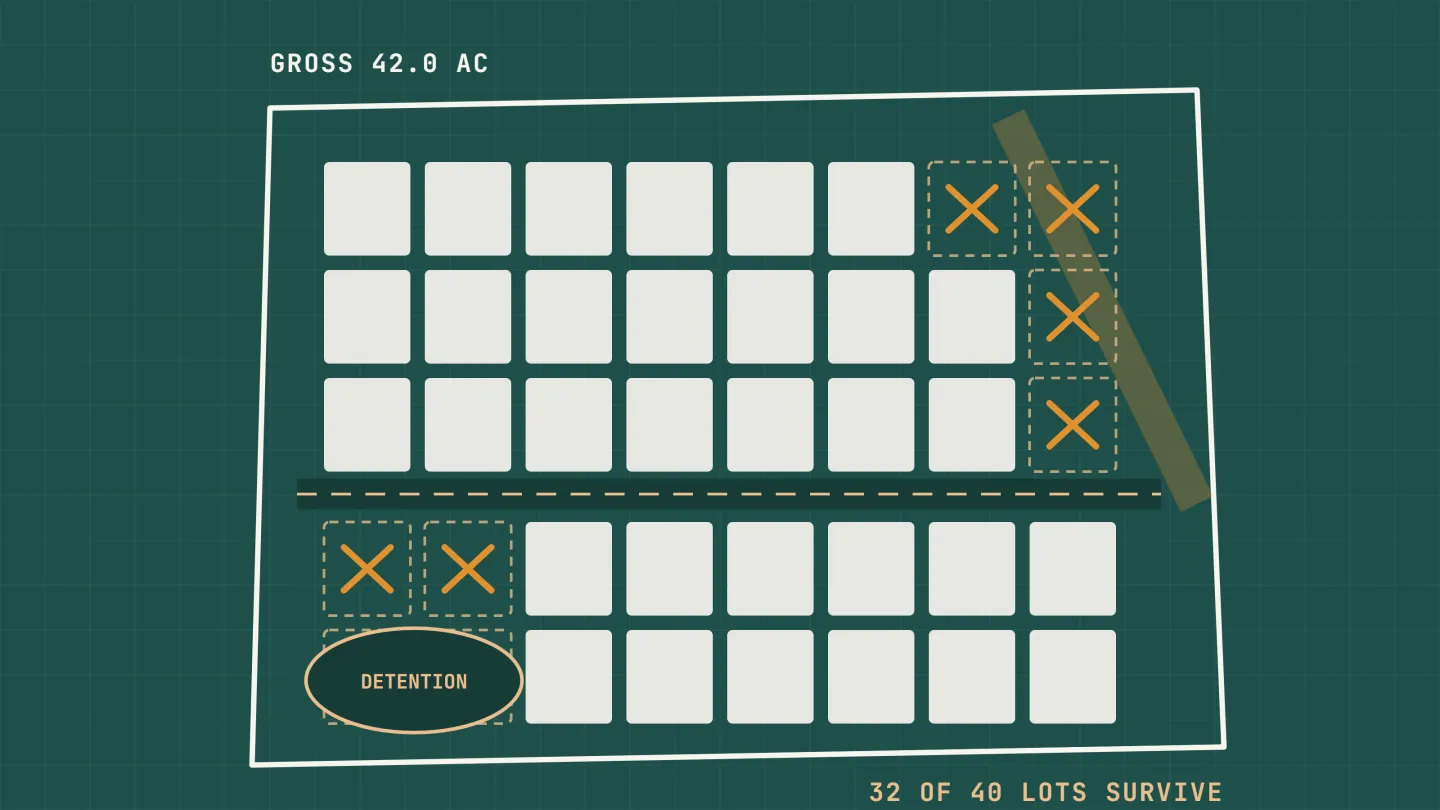
The first lot count on a new site is almost always too high. Not because anyone is careless, but because the things that remove lots — easements, drainage, frontage, odd corners — only show up once someone draws them. You can draw most of them yourself before the engineer does.
Start with what you cannot build on
Take the gross acreage and subtract everything that will never hold a house:
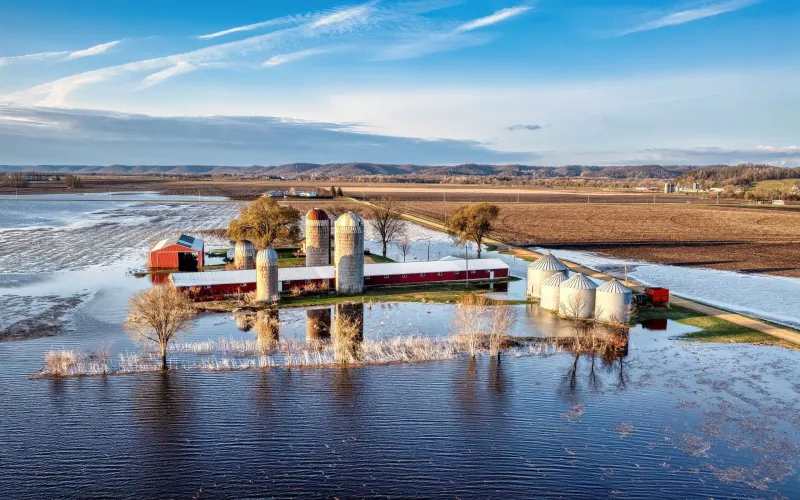
- Floodplain and floodway, from the current flood maps.
- Wetlands and their buffers.
- Utility, pipeline and drainage easements from the title commitment and survey.
- Slopes too steep to grade economically.
Then take out the roads
Streets and right-of-way commonly consume somewhere between a fifth and a third of what is left, depending on lot width and how efficient the street layout can be. Narrow lots need more street frontage per lot, so they lose more land to roads.
Leave room for water and open space
Detention or retention ponds, required open space and landscape buffers come next. Ask what the jurisdiction typically requires; on a site with poor drainage outfall, detention alone can take several acres.
A worked example
| Step | Acres | Running total |
|---|---|---|
| Gross site | 42.0 | 42.0 |
| Floodplain and easements | −6.0 | 36.0 |
| Streets and right-of-way (25%) | −9.0 | 27.0 |
| Detention and open space | −3.0 | 24.0 |
| Net developable | 24.0 |
At 60-by-120-foot lots (about 0.165 acres each), 24 net acres suggests around 145 lots on paper. Allow another 10% or so for geometry — corners, cul-de-sacs, lots that don’t quite fit — and a more honest planning number is about 130.
Gross acres sell land. Net acres build lots. Price the second number.
Sanity-check with a sketch
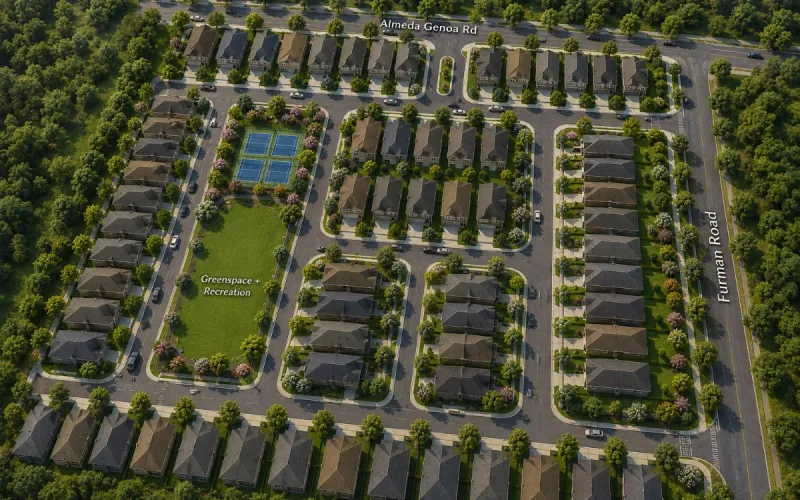
Before you rely on the count, lay rough lot blocks over an aerial at the right scale. It takes an hour, and it is the fastest way to find the lots that a spreadsheet assumes and a site plan can’t deliver.